Welcome to the Mathematical World!
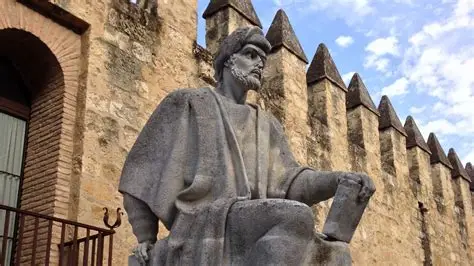
Ibn ar-Rushd (Averroes)
Andalusian Polymath: Philosopher, Jurist, Physician, and Natural Scientist
Ibn ar-Rushd (1126 – 1198 CE), also known as Averroes, was a towering figure of the Islamic Golden Age. Born in Córdoba and later exiled to Lucena before being rehabilitated, he served as both Chief Judge and physician under the Almohad Caliphate. He authored over a hundred works across philosophy, theology, medicine, astronomy, and jurisprudence.:contentReference{index=0}
Philosophy and Logic
As "The Commentator," he wrote influential summaries and commentaries on Aristotle and Plato. His major
philosophical
works include:
- The Incoherence of the Incoherence — a rebuttal to al-Ghazali’s critique of philosophy.:contentReference{index=1}
- On the Harmony of Religions and Philosophy — arguing that philosophy complements Islamic faith, and that the Qur’an should sometimes be interpreted allegorically.:contentReference{index=2}
He firmly defended the compatibility of reason and religion. One commentator summarized his view well: philosophy is “nothing other than to look into creation … to be guided to the Creator.”:contentReference{index=3}
Astronomy and Natural Philosophy
Ibn ar-Rushd challenged the Ptolemaic system, rejecting eccentrics and epicycles in favor of Aristotelian concentric spheres. He emphasized that astronomy must align with physical reality, not just predictive calculation.:contentReference{index=4}
At age 25, he made several observatory-based discoveries: a previously unseen star near Marrakech, sunspots (thought to be planetary transits), and lunar surface irregularities explained through thickness variations.:contentReference{index=5}
Medicine and Medical Writings
In medicine, his work Kitāb al-Kulliyyāt fi al-Ṭibb (“Generalities on Medicine”)—known in Latin as the Colliget—covered anatomy, pathology, pharmacology, clinical diagnosis, and hygiene. It was widely used across Europe until the early modern period.:contentReference{index=6}
Legacy and Influence
- His commentaries introduced Aristotelian philosophy to medieval Europe, giving rise to “Averroism” in Scholastic thought.:contentReference{index=7}
- He argued for the harmony of faith and reason and defended philosophy as an Islamic science.:contentReference{index=8}
- Despite early controversy and exile, his writings were rediscovered and celebrated by Christian scholars like Thomas Aquinas.:contentReference{index=9}

All rights reserved by the Mathematical Unity
Contact: +8801400044645
Email: mathematicalhorse1453@gmail.com
Our Discord Server: Mathematical Unity [Ulus Riyadiyat]